Tuesday, 22 September 2015

The Best Trailer Tow Hitch Money Can Buy


Trailer tow hitch
Choosing the right trailer tow hitch for your vehicle is not only important for the type of vehicle and trailer you have, but also to ensure the safety of the connection and the drivability of your vehicle. Choosing the right hitch depends on many different factors, including your vehicle’s classification, trailer size and trailer weight. 

There are two popular types of towing hitch that are used the most in everyday situations, the basic trailer tow hitch and the air safe hitch, but many other specific towing hitches used for commercial or industrial fields are coming onto the market with special abilities such as the fifth wheel or flatbed hitch.


Basic Functions of a Hitch

Air safe hitch
In basic terms, a trailer hitch is a strong piece of equipment that attaches directly to a vehicle in order to tow a trailer or a load. The hitch is the device that provides the connection to the trailer from the towing vehicle itself. Considered a permanent installation, there are a few different forms of trailer hitch, depending on manufacturer, but many tend to have the same varied system of standardised mounts. 


Classification of Tow Hitch


These trailer tow hitches are placed into the different classification based on a number of factors. One of the most important factors is the weight of the trailer or the load you want to tow. In a complete system, you have to calculate the maximum trailer load weight you can safely tow by checking the towing ratings of your hitch ball, ball mount and hitch itself for the lowest figure. 


As the maximum tow rating should be based on the weakest figure of the three, safety is your number one priority. The different hitch classes in place are as follows:

Class 3 Hitch

towing jetski
  • Tow up to 2.7 tonne (gross trailer weight)
  • Cargo box
  • Bike rack
  • Motorcycle
  • Jet Ski

The Hitch Class 3 Supports Vehicle Classification Such As: 

  • Sub-Compact
  • Car
  • SUV/ Van
  • Light Ute
  • Heavy Duty Ute


Class 4 Hitch

towing motorcycle
  • Tow up to 4.5 tonne
  • Small Caravan
  • Small Boat
  • 2 x Quad bike / Motorbike

The Hitch Class 4 supports all of the previous vehicles, discounting the sub-compact vehicle classification.


Class 5 Hitch

towing boat
  • Tow up to 6.35 tonne
  • Medium sized caravan or trailer
  • Larger sized boat or fishing boat
  • Small farming machinery

The class 5 hitch is usually kept for use with vans and SUVs, light Utes and heavy duty Utes.


Class 6 Hitch

towing plane
  • Tow up 9 tonne
  • Large trailer
  • Large boat or fishing boat
  • Light aircraft
  • Light to medium farming machinery
  • Some heavy machinery
  • Light industrial machinery

The Class 6 Hitch is usually reserved for heavy duty utility vehicles, light trucks, high-performance SUVs and off-roaders with extreme pulling power and not the average car. 


Achieve a Smooth Ride


As a hitch is connected to the rear of the vehicle, the more weight that is added, the more your vehicle has to pull. Given the large weight on the rear of the vehicle, this can often hinder ride quality and ride smoothness to a degree that those little bumps in the road can prove quite painful and in some cases dangerous to a heavy load setup.

In these cases, the airsafe hitch is a great innovation in the trailer moving industry and provides a dampening effect to a trailer, to smooth out all of those bumps in the road. The system works by placing the hitch ball or pin system itself onto a bed of compressed air, which is like having an extra layer of suspension between you and your trailer. 


Improve Safety of Your Load


Safety of Your Load
This system works so well and is easy to install and attach that many trailer hitch users are now switching to this system. Simply install the air hitch and use compressed air to attain the correct trailer height and you are ready to go. Not only does it improve on ride smoothness, it also improves safety when it comes to maneuvering your vehicle and trailer combo. 


When it comes to trailer towing, nothing is more important than safety. Getting your trailer hitch installed correctly by a professional will ensure that you have a solid and secure connection to your trailer. Knowing the weight of your trailer when empty is an important step in keeping you safe and carefully distributing the weight of your loads and securing them safely to the trailer is the final step in your trailer pulling safety checks that will ensure you have a smooth and safe journey.

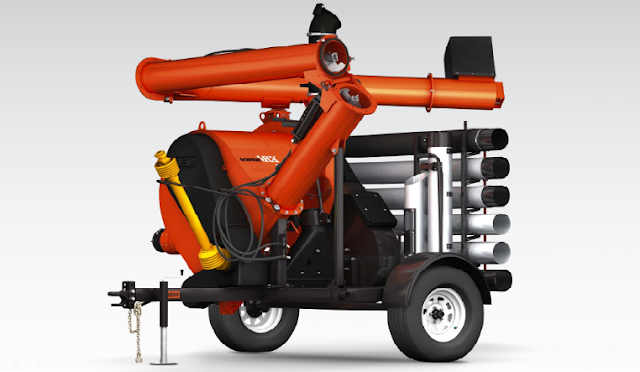
Image Source [1] [2] [3] [4] [5] [6] [7] [8] [9]

Sunday, 23 August 2015

Grain Handling Equipment That Improves Efficiency and Saves Money

Grain Handling Equipment

Whilst many farmers would prefer to use methods of grain handling that have been tried and tested for many years, investment in new grain handling equipment can vastly improve productivity and decrease crop loss as you look to the future.

Using older equipment that is bordering on being beyond repair or is simply a hazard to operating may be affecting the overall efficiency of your grain handling, and investing in new machinery can pay dividends for years to come.

If you currently do not have sufficient grain handling equipment to meet your needs, you may want to consider purchasing some of the tops of the line products that have the latest technology under their belt to improve your entire grain and crop harvesting procedure and set you up for years to come.


Get Ready to Upgrade to the Latest Innovations


You’ve come into the market at just the right point to see new developments in grain handling that will help with the day to day tasks required by farmers around the globe.


The advantages of using new equipment are huge, and one of the main reasons why so many farmers upgrade is due to the increased efficiency in how the machinery itself operates.

Mixing, sifting is done much more efficiently by the latest equipment, and processing and packing are done with a mix of manual and automatic procedures to give you the best quality control with less manual labour.

Some of the best grain handling equipment in Australia is currently using specialist treaters that treat seed by means of a gentle drum system instead of a grain auger, which causes less damage during the processing stage.


Minimising Crop Loss and Damage


New separator equipment ensures that the separation process is completed more quickly and accurately during its first processing point; therefore less processing equipment is needed in the long run, saving time, money and plenty of extra unnecessary equipment in the longer term.

When it comes to drying and airing of your grain, there has been a huge leap in the technology behind grain storage and how the grain is treated for fungus, residue and moisture build up. Some of the latest grain storage units contain vertical central columns that are perforated to allow air to be channelled directly to the middle of a grain pile to reduce moisture and crop damage.

Standard grain bin storage hasn’t changed much over the past couple of hundred years, but with new innovations coming onto the market, the loss reduction that the advanced grain storage system allows almost pay for themselves over a few years’ time.


Efficient Grain Augers


Grain augers are one of the necessary tools farmers in the grain industry use to help make the grain storage, movement of grain and transportation preparation easier. Saving countless amounts of time and money in the process, the latest grain augers are available for jobs small and large, and are often scalable in their design in allowing a truly versatile range of uses to suit any size production.

Efficient Grain Augers


From grain vacuums to entire grain handling systems, the world of grain handling equipment has come a long way when in technology and efficiency. The latest equipment offers farmers the chance to improve their production, from minimising crop damage to increasing crop storage life that will have a drastic impact on many farms and industries nationwide.