Showing posts with label trailer tow hitch. Show all posts

Wednesday, 21 December 2016

Hitch up Your Trailer Fast in 3 Easy Steps Using Swift Hitch


Are you looking for a safe and reliable way to tow your trailer without all of the hassles of difficult to rig towing bars? Tired of using chains and cables? Then upgrading to Swift Hitch is one of the best ways to ensure a safe trailer hook-up and a smooth ride! Swift Hitch offers the latest technology to aid an easy tow hitch connection and gives peace of mind for those who are new to trailer towing.


The Swift Hitch system is comprised of a number of intelligently designed parts that work together to give you the best experience possible. The system includes a magnetic camera mount and separate display to monitor, and with a full Swift Hitch installation, you will save time and effort when you hook up your trailer, as well as give you greater control over safety thanks to the

Step-1: Attaching Your Swift Hitch Camera


The Swift Hitch wireless camera plays the main role in giving you access to a view of your tow hitch that was otherwise inaccessible from the driver’s seat. The camera is made for durability and ease of use, with its strong magnetic base allowing you to attach it to the rear of your vehicle.

Attach the camera to the rear of your vehicle and point it in the direction of your to hitch. This is made easy thanks to the camera’s ability to be tilted and twisted whilst secured to the vehicle until it is directly facing the tow hitch and switch the wireless camera on.

Step-2: Using the Wireless Hitch Display


Swift Hitch includes a neat wireless display so that you can monitor what is happening on the wireless camera. As soon as you have aligned your Swift Hitch wireless camera to the rear of your vehicle and pointed it toward the hitch, switch it and the wireless display on.

Source: https://www.amazon.com/Swift-Hitch-SH01-Portable-Wireless


Before you enter your vehicle, view the position of the camera on the display to ensure you have a good view of your hitch and space where the trailer coupler will arrive in view. Reposition the wireless camera if necessary and continue to the next step.

Step-3: Using the Swift Hitch Wireless Camera System


Enter your vehicle and place the Swift Hitch display in a safe place so that you can see the screen whilst safely reversing your vehicle. Use the display as an aid to slowly back up to your trailer coupler and make any necessary repositioning of your vehicle to line up the hitch and the coupler.

The Swift Hitch display features a simple button you can press to mirror-image the display from left to right in order to avoid any disorientation caused by frequent glances at the camera and your vehicle's mirrors.

Swift Hitch is one of many different systems in use to ensure that your trailer towing is performing safely and securely to perform your daily routines. Working in parallel with the air safe hitch is one way to enhance your road safety, improve vehicle handling when towing a trailer, as well as saving you time and effort for your work and leisure.

The Swift Hitch system is a great way to avoid the permanent installation of expensive monitors and sensors, and gives you a handy, wireless and cost-effective way of ensuring your trailer is lined up and hooked up every time. Upgrade your hitch experience today with Swift Hitch.

Sunday, 6 November 2016

Is It Worth Investing In An Air Ride Hitch for Towing?

airsafe hitch, tow hitch, trailer tow hitch

Trailer tow or air ride hitches are becoming more popular for drivers all over Australia, and for good reason. Road safety for all motorists has always been a major concern, and improvements in technologies and greater awareness have succeeded in reducing the road toll.
This is one such technology which despite being a little pricey, is usually worth the investment. Let’s take a look at some of the reasons why and how tow hitches work.


What is an Air Ride Hitch?


airsafe hitch, tow hitch, trailer tow hitch
Air Safe Hitch

When towing a trailer, there is always the risk of losing control due to the significantly greater weight. In addition, bumps in the road can be problematic and cause the trailer to bounce around, making it more difficult to control. Part of the reason for this is that without a good hitch, there is a tight, rigid connection between the vehicle and the trailer; when the former hits a bump, the shock is passed to the latter.

An AirSafe Hitch is designed specifically to counter this problem by reducing shock transfer and releasing the tension of the connection between the trailer and vehicle. Where otherwise the trailer would jolt and bounce when a tire hits a bump or pothole in the road, the hitch acts as a ‘ball’ of air that absorbs and spreads the impact of the shock, making it essentially glide over bumps with minimal jolt effect.

There is also a slight reduction in the amount of fuel used given that it improves suspension significantly.


What Are The Benefits?


tow hitch, airsafe hitch, trailer tow hitch
Without Hitch

tow hitch, airsafe hitch, trailer tow hitch
With Hitch


Often the decision on whether to use an air ride or a standard hitch depends on -


  • Driver preference
  • What it is you’re towing


Generally speaking, the improvements in smoothness and stability are noticed a lot more when towing larger trailers and more often than not, drivers with heavier loads will see the return on investment. Many people that use air ride hitches will not use anything else, and indeed once you’ve experienced the benefits it is difficult to go back.

The simple fact is that constant bumps along the road can do costly damage to a trailer, whether it is over a long period of time or one particularly nasty road bump that breaks something. Not to mention the fact that this technology greatly reduces the likelihood that you’ll lose control of the vehicle while on the road, making you safer. Further, there are benefits when you consider that the contents stored in the trailer are significantly safer as well.

There are also often legal benefits that come from the fact that certain trailer manufacturers have in their fine print that damage can only be held under warranty provided you are using certain hitches. Using the state of the art, safest and most reliable trailer tow hitch will ensure you’re looked after in the very unlikely event of damage.


Are They Worth It?


airsafe hitch, trailer tow hitch, tow hitch

Air ride hitches are an investment and represent an extra cost, but when you consider how much a vehicle and trailer are worth to you, it makes sense to put aside a little more to ensure they are protected.
That said, the value of this technology varies from case to case. As mentioned, the benefits are maximised when you are dealing with a heavier load and thus a more rigid pin area.

Some find that there are ways to reinforce their trailer such that the potential damages are minimised, others find that nothing compares to air ride hitch. It really comes down to your specific circumstances and it’s worth having a chat to an expert about your needs. Here are some important trailer towing tips everyone should know.

Contact Advantec Australasia Pty Ltd today for more information by calling 1800121611.


Tuesday, 22 September 2015

The Best Trailer Tow Hitch Money Can Buy


Trailer tow hitch
Choosing the right trailer tow hitch for your vehicle is not only important for the type of vehicle and trailer you have, but also to ensure the safety of the connection and the drivability of your vehicle. Choosing the right hitch depends on many different factors, including your vehicle’s classification, trailer size and trailer weight. 

There are two popular types of towing hitch that are used the most in everyday situations, the basic trailer tow hitch and the air safe hitch, but many other specific towing hitches used for commercial or industrial fields are coming onto the market with special abilities such as the fifth wheel or flatbed hitch.


Basic Functions of a Hitch

Air safe hitch
In basic terms, a trailer hitch is a strong piece of equipment that attaches directly to a vehicle in order to tow a trailer or a load. The hitch is the device that provides the connection to the trailer from the towing vehicle itself. Considered a permanent installation, there are a few different forms of trailer hitch, depending on manufacturer, but many tend to have the same varied system of standardised mounts. 


Classification of Tow Hitch


These trailer tow hitches are placed into the different classification based on a number of factors. One of the most important factors is the weight of the trailer or the load you want to tow. In a complete system, you have to calculate the maximum trailer load weight you can safely tow by checking the towing ratings of your hitch ball, ball mount and hitch itself for the lowest figure. 


As the maximum tow rating should be based on the weakest figure of the three, safety is your number one priority. The different hitch classes in place are as follows:

Class 3 Hitch

towing jetski
  • Tow up to 2.7 tonne (gross trailer weight)
  • Cargo box
  • Bike rack
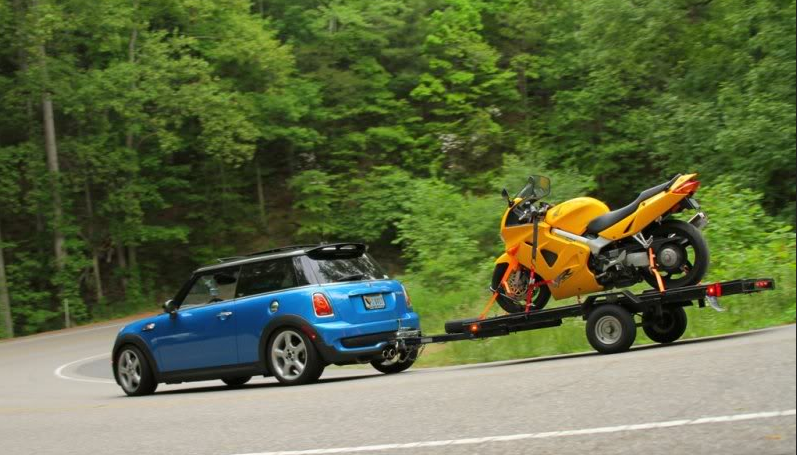
  • Motorcycle
  • Jet Ski

The Hitch Class 3 Supports Vehicle Classification Such As: 

  • Sub-Compact
  • Car
  • SUV/ Van
  • Light Ute
  • Heavy Duty Ute


Class 4 Hitch

towing motorcycle
  • Tow up to 4.5 tonne
  • Small Caravan
  • Small Boat
  • 2 x Quad bike / Motorbike

The Hitch Class 4 supports all of the previous vehicles, discounting the sub-compact vehicle classification.


Class 5 Hitch

towing boat
  • Tow up to 6.35 tonne
  • Medium sized caravan or trailer
  • Larger sized boat or fishing boat
  • Small farming machinery

The class 5 hitch is usually kept for use with vans and SUVs, light Utes and heavy duty Utes.


Class 6 Hitch

towing plane
  • Tow up 9 tonne
  • Large trailer
  • Large boat or fishing boat
  • Light aircraft
  • Light to medium farming machinery
  • Some heavy machinery
  • Light industrial machinery

The Class 6 Hitch is usually reserved for heavy duty utility vehicles, light trucks, high-performance SUVs and off-roaders with extreme pulling power and not the average car. 


Achieve a Smooth Ride


As a hitch is connected to the rear of the vehicle, the more weight that is added, the more your vehicle has to pull. Given the large weight on the rear of the vehicle, this can often hinder ride quality and ride smoothness to a degree that those little bumps in the road can prove quite painful and in some cases dangerous to a heavy load setup.

In these cases, the airsafe hitch is a great innovation in the trailer moving industry and provides a dampening effect to a trailer, to smooth out all of those bumps in the road. The system works by placing the hitch ball or pin system itself onto a bed of compressed air, which is like having an extra layer of suspension between you and your trailer. 


Improve Safety of Your Load


Safety of Your Load
This system works so well and is easy to install and attach that many trailer hitch users are now switching to this system. Simply install the air hitch and use compressed air to attain the correct trailer height and you are ready to go. Not only does it improve on ride smoothness, it also improves safety when it comes to maneuvering your vehicle and trailer combo. 


When it comes to trailer towing, nothing is more important than safety. Getting your trailer hitch installed correctly by a professional will ensure that you have a solid and secure connection to your trailer. Knowing the weight of your trailer when empty is an important step in keeping you safe and carefully distributing the weight of your loads and securing them safely to the trailer is the final step in your trailer pulling safety checks that will ensure you have a smooth and safe journey.


Image Source [1] [2] [3] [4] [5] [6] [7] [8] [9]